

Next start:
Advance your professional career with a bachelor's degree in Criminal Justice.
What fields can I work in with a BS in Criminal Justice?
Earning a B.S. in Criminal Justice prepares graduates for a variety of careers in law enforcement, corrections, offender rehabilitation, substance abuse counseling, conflict resolution, policy development, and law careers.
What jobs can I apply for with a BS in Criminal Justice?
Graduates holding a B.S. in Criminal Justice may qualify for many different roles including as probation officer, forensic technician, police officer, corrections officer and more.
Overall employment in protective service occupations is projected to grow for all occupations from 2024 to 2034.
Overall employment of police and detectives is projected to grow 3 percent from 2024 to 2034, about as fast as the average for all occupations.
Already a professional in the field? Consider our Public Safety Administration degree to advance your career!
Check out our Career Outlook planner for career and salary prospects in your region!
- 100% online coursework
- Earn Credit for Qualified Training - Police/Fire Academy, Military Training, EMS/EMT/Paramedic, Judicial Marshal
- Program led by industry experienced instructors
- Students benefit from experiences of their peers
- Concentrations in Victim Advocacy or General Criminal Justice
- Part-Time or Full-Time - you set the pace
- Portfolio option for additional flexibility
- Standardized exams option save time and money
- Flat tuition rate of $250 per credit for qualifying active-duty personnel
- 100% tuition discount for qualifying Connecticut veterans
The Bachelor of Science in Criminal Justice offers an interdisciplinary foundation within the liberal arts and sciences. This major requires a minimum of 42 credits and allows for students to choose a concentration. See the full requirements for our Criminal Justice major in our Official Catalog.
CRJ 101: Criminal Justice
3 creditsCRJ 215: Criminology
3 creditsCRJ 315: Race, Class, & Gender in the Criminal Justice System
3 creditsCRJ 325: Ethics in Criminal Justice
3 creditsMAT 105: Statistics (or PSY 216: Statistics for Behavioral Science)
3 creditsPSY 216: Statistics for Behavioral Science (or MAT 105: Statistics)
3 creditsPOL 321: Constitutional Law
3 creditsPSY 101: Psychology
3 creditsPSY 410: Research Methods for Behavioral Science
3 credits
Students enrolled in the Criminal Justice Major choose one of these Concentrations (15 credits).
General Criminal Justice
CRJ 210: Forensic Science
CRJ 360: Homeland Security and Criminal Justice
PLG 211: Criminal Law
PSY 333: Social Psychology and Deviance
PSY 336: Abnormal Psychology
SOC 320: Urban Youth in American Society
SOC 449: Social Problems: Impact on Workplace
Victim Advocacy
CRJ 340: Domestic & Sexual Violence
CRJ 355: Mental Health/Substance Abuse in Criminal Justice
CRJ 335: Victimology
CRJ 405: Victim’s Rights and Services
One additional 3-credit elective in Criminal Justice
Students who graduate with a major in Criminal Justice will be able to:
- Explain the scope and nature of the three major components of the criminal justice system: police, courts, and corrections.
- Apply the theoretical models that attempt to explain the causes of crime.
- Explain how the fair and just operation of the criminal justice system is dependent upon the ethical and professional behavior of those working in the criminal justice system.
- Apply research and statistics to the analysis of data.
- Communicate effectively.
Students who graduate with a major in Criminal Justice with a concentration in Victim Advocacy will be able to:
- Distinguish between ethical and unethical behavior as it applies to the criminal justice field,
- Relate the types and patterns of family and sexual violence, including myths and realities, cross-cultural and international patterns to prevention and punishment practices and policies,
- Analyze the impact of criminal justice and the courts policies and practices on victims who have mental health or substance abuse disorders,
- Apply victim rights to criminal-case scenarios and explain how victims can be assisted in dealing with the effects of crime and the criminal justice system,
- Identify and analyze victim participation in the criminal justice decision-making, victim services and restitution, and restorative justice initiatives, and
- Explain how to be an effective victim advocate.
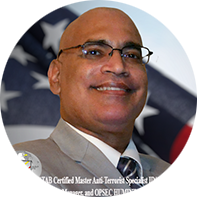
Anthony Davila
U.S. Navy Veteran; retired Bridgeport police Detective, and POSTC instructor specializing in homeland security, state and local anti-terrorism tactics, WMD, and suicide bombers. Upon retiring I transitioned to federal service, I was employed with the US Office of Personnel Management as an Investigations case analyst and special Agent. Additionally, I had the privilege of being a member of the Marine Forces North Intelligence and Threat Information Fusion Cell as the law enforcement intelligence analyst.
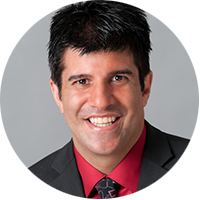
Daryl Capuano
Daryl Capuano has taught government, law and criminal justice courses for Charter Oak since 2001, including courses that he designed related to Constitutional Law, The Modern Presidency, and Controversies in Law and Government. He loves teaching Charter Oak students and tells anyone willing to listen that Charter Oak is a wonderful institution. Daryl graduated magna cum laude and Phi Beta Kappa from Georgetown University, where he graduated number one in his concentration and was named the Outstanding Student in American Government. Daryl simultaneously earned a law degree from the University of Pennsylvania Law School, where he was named to Who’s Who in American Law Students, and a master’s degree from Penn’s Fels Center of Government. Daryl also received an Equal Justice Foundation Fellowship to work at the The Brookings Institute, served as an Assistant District Attorney in Philadelphia and the United States as an enforcement attorney with the Securities and Exchange Commission. Daryl lives in Old Saybrook, CT with his wife and three children.

Dr. George Ackerman
Dr. George Ackerman is a Professor in the area of criminal justice, business and the law. He received his Ph.D. from the School of Public Service Leadership, Capella University, a J.D. from the Shepard Broad Law Center, Nova Southeastern University and Police certification from Miami-Dade College School of Justice. His current research focuses on the underserved population of family members of homicide victims. Outside of the classroom I enjoy running charity 5K’s, basketball, family time and volunteering for <a href="https://www.togetherforsharon.com/" target="_self">https://www.togetherforsharon.com/</a> which I founded in memory of my mother, Sharon Riff Ackerman for Parkinson’s Awareness & hope for a cure.
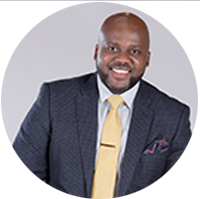
Dr. Orlando Wright
Dr. Orlando Wright holds a Master of Social Work from the University of Connecticut and a Ph.D. in Human Behavior from Capella University. Dr. Wright is the Director of Partnerships and Innovation at the American Society of Addiction Medicine (ASAM). Previously, he facilitated inter-agency collaboration across hospitals, community-based organizations, and the Local Behavioral Health Authorities to optimize and develop behavioral health resources within Montgomery and Prince George County, Maryland. Dr. Wright is a board licensed clinical social worker and supervisor in Maryland, USA. He has over 20 + years of experience in management, behavioral health systems, & partnership development. He enjoys innovation within the behavioral health space and continues to optimize, drive, and facilitate groundbreaking ideas in the field of behavioral health. Dr. Wright authored, “Parenting Status Offending Youth: Parent’s Perceptions of Diversionary Services in the Juvenile Justice System,” and co-authored, “Soaring into Greatness.” Dr. Wright is married and he is the father of two lovely girls. In his free time, he enjoys fishing, outdoor activities, and mentorship.
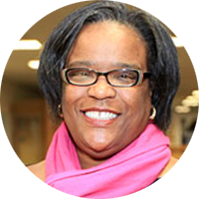
Dr. Tuesday L. Cooper
Dr. Tuesday L. Cooper has 25 years of experience in higher education as both an administrator and faculty member. Dr. Cooper began teaching interdisciplinary and criminal justice related courses at the School of Human Services at Springfield College (Springfield, MA) and currently serves as full-time faculty at Manchester Community College in Manchester, CT. Prior to her career in higher education, she practiced law (criminal defense and landlord/tenant) and worked in the human services field. Dr. Cooper serves as a reviewer for the Journal of Negro Education and the Journal of Studies in Graduate and Professional Student Development. She is the author of The Sista’ Network: African American Women Faculty Successfully Negotiating the Road to Tenure and Diversity on Campus (2nd Edition, Co-Authored with Drs. David Schuman and Carolyn Pillow). Dr. Cooper earned an Ed.D., in Higher Education Administration from the University of Massachusetts Amherst; a J.D., from Western New England College School of Law; and a B.A. in Political Science from Rutgers, The State University of New Jersey. More recently, she’s earned certificates in Online, Hybrid and Blended Education and Working Adult Education from Laureate International Universities.

Susana Orozco
Susana Orozco is the Director for the Academic Programs at Charter Oak State College. She also is an adjunct faculty teaching within the Criminal Justice Program. She holds a Master of Science degree (M.S.) in Criminal Justice with a focus in Victimology from the University of New Haven, CT, Henry C. Lee College of Criminal Justice and Forensic Sciences. She also completed her Bachelor of Science degree (B.S.) from Springfield College, in Human Services. Susana participates on different Charter Oak committees such as the Equity Action Team (DEI), General Education Task force, Accessibility Task Force, and Strategic Planning. Prior to her Academic titles, her previous experience has been working as a clinician with juvenile, adult offenders within a variety of rehabilitation programs including working closely with court officials; police/probation/parole officers, bail commissioners, public defenders, private attorneys, and other state institutions. She has worked for the following organizations: Wheeler Clinic, Community Mental Health Affiliates, CT Dept. of Children and Families including internship with CT Adult Probation (CSSD). Past appointment titles include Academic Program Director for Criminal Justice/Homeland Security Program, Associate Dean for Gen. Ed. Courses, and adjunct faculty for online/on-ground courses teaching a variety of Criminal Justice subjects such as Introduction to CJ, Criminology, Report Writing for CJ, Cultural Diversity for the CJ Professional, Women & Crime. Susana is also a published co-author for the IDS 101: Cornerstone Seminar E-Book: Reading Materials which is an Open Education Resource (OER) material available on GoOpen Ct, licensed by Creative Commons, https://goopenct.org/courseware/lesson/1394/student/.
Charter Oak State College's Credit for Prior Learning (CPL) program helps you save time, reduce costs, and earn your degree sooner by recognizing what you already know. Learn more about CPL.
- 100% online
- Credit for credentials
- Six (6) start dates
- Expert Faculty